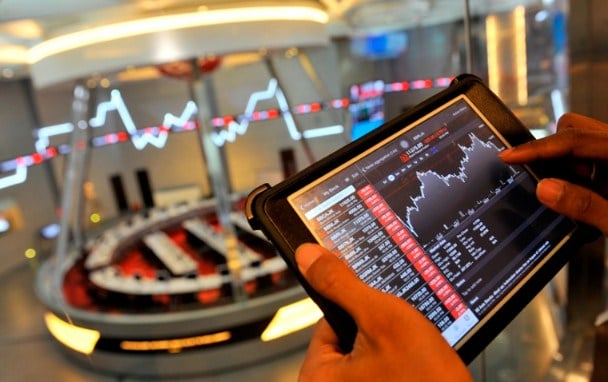
Navigating the Markets: The Ultimate Strategy Guide for Online Trading
The digitalization of the financial world has democratized access to global markets. Today, anyone with an internet connection and a smartphone can buy shares of global tech giants, trade foreign currencies, or speculate on commodities. This accessibility has fueled a massive surge in online trading, attracting millions of retail participants eager to grow their capital.

However, the ease of entering the market often masks its inherent complexity. Online trading is not a casual game or a guaranteed shortcut to wealth; it is a high-stakes environment where success is driven by discipline, psychological control, and strict mathematical probability. Without a structured framework, trading quickly devolves into mere gambling. To survive and thrive in the modern market landscape, establishing a robust, adaptive strategy is absolutely non-negotiable.
Developing a Comprehensive Trading Edge
A trading edge is a proven technique or psychological approach that gives a trader a statistical advantage over the market in the long run. Building this edge requires combining deep technical understanding with logical analysis.
Mastering Technical and Fundamental Analysis
Successful strategies generally sit at the intersection of technical and fundamental analysis. Fundamental analysis involves evaluating the intrinsic value of an asset—studying corporate earnings reports, economic data releases, central bank monetary policy decisions, and geopolitical events. Technical analysis, on the other hand, focuses on reading price charts, identifying volume trends, and using indicators like moving averages or support and resistance levels to time market entries and exits. While day traders rely heavily on charts, understanding the underlying macroeconomic environment prevents you from trading against dominant market forces.
Defining Your Trading Persona
Markets offer different environments based on your available time and temperament. You must align your strategy with your lifestyle. Day trading requires constant attention, as positions are opened and closed within minutes or hours to capture small price movements. Swing trading, by contrast, involves holding assets for several days or weeks to capture broader market trends, making it highly suitable for individuals balancing a standard career. Scalping targets micro-movements within seconds, while position trading looks at multi-month macroeconomic shifts. Attempting a style that clashes with your daily routine or risk tolerance inevitably leads to emotional errors.
The Core Pillars of Risk Management
The difference between a professional trader and an amateur is not how much money they make, but how effectively they protect what they already have. Even the most accurate analytical model will fail without ironclad risk parameters.
Implementing the One Percent Rule
A fundamental rule among seasoned market practitioners is never to risk more than one percent to two percent of total account capital on a single trade. If you possess a ten-thousand-dollar account, your maximum loss on any given setup should never exceed one hundred dollars. This conservative sizing ensures that a normal streak of consecutive losses will not deplete your capital or force you out of the market entirely.
Utilizing Hard Stop-Loss and Take-Profit Orders
Emotions are a trader’s greatest enemy. When a trade goes against you, hope whispers that the market will reverse; when a trade goes in your favor, greed urges you to stay in too long. To eliminate this cognitive bias, every trade must be launched with a predefined exit plan. A stop-loss order automatically cuts a losing position at a specific price level to minimize damage, while a take-profit order automatically locks in earnings when the target is met. Setting these orders before entering a trade ensures decisions are made with cold logic rather than panic.
Evaluating Risk-to-Reward Ratios
A mathematically sound strategy requires a favorable risk-to-reward ratio. As a standard baseline, look for setups that offer a minimum of a one-to-two ratio. This means that for every dollar you risk, you stand to make two dollars. By adhering to this structure, your strategy remains profitable even if your win rate is only fifty percent, as your winning trades will always outsize your losses.
The Critical Role of Psychology and Data
The finest technical strategy will collapse if the person executing it is compromised by fear or greed. Modern online trading requires significant mental stamina.
Markets are entirely unpredictable, and losing is an unavoidable cost of doing business. Amateurs often react to losses by “revenge trading”—immediately entering larger, poorly researched positions to recoup their money, which frequently leads to catastrophic account drawdowns. Professional traders view losses simply as data points.
To maintain this emotional detachment, keeping a detailed trading journal is essential. Documenting the rationale behind every entry, the emotional state during execution, and the final outcome allows you to audit your behavior objectively. Over time, this data reveals structural flaws in your system and personal behavioral traps, turning random market experiences into a refined, professional process.
Conclusion
The future of online trading belongs to those who treat it with the seriousness of a running business. While modern platforms offer instant execution and unprecedented access to global liquidity, they also expose unprepared capital to intense volatility and institutional-grade competition.
Developing a profitable online trading strategy is an evolutionary process. It requires defining a clear analytical edge, enforcing non-negotiable risk boundaries, keeping meticulous records, and cultivating complete psychological discipline. By focusing entirely on mastering the execution of your process rather than obsessing over individual outcomes, you transform online trading from a volatile gamble into a structured, sustainable pursuit of financial growth.